This blog covers world political issues, mostly about LGBTQ news and rights, and other topics of my interest.
Tuesday, June 14, 2016
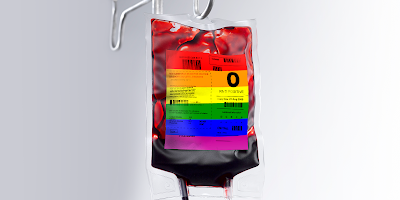
Discrimination barred gay men from donating blood to Orlando shooting victims
Thursday, April 28, 2022
Canada lifts restrictions on gay men's blood donations
Health Canada approved the request by Canadian Blood Services to end the policy that restricts homosexuals from donating blood for three months after engaging in gay sex. A move Prime Minister Justin Trudeau said was "good news for all Canadians" but had taken too long.
Trudeau said at a news conference the ban should have ended 10 to 15 years ago, but research proving it would not affect the safety of the blood supply had not been done by previous governments.
Trudeau also said his government spent C$5 million dollars on research into the safety aspects of changing the blood donation rules and multiple scientific reports showed the blood supply would continue to be safe.
The research said current risks of contracting HIV from the blood supply, with all samples tested, was estimated to be "very low," at 1 in 20.7 million.
The policy change marks a significant milestone toward a more inclusive blood donation system.
Trudeau announced Canada ending ban on gay men's blood donation, watch it below:
Tuesday, June 9, 2015
"Bad Blood" Parody
Saturday, September 25, 2021
Restrictions for gay men to donate blood ended in Germany
Homosexual men can now donate blood more easily than before in Germany.
The German Medical Association and the Paul Ehrlich Institute responsible for the safety of blood products have updated the relevant guidelines.
Up until now it was the case that people with so-called sexual risk behavior could only donate blood if they stated that they had ended this risk behavior at least twelve months before the donation.
From a scientific point of view, what is known as risk behavior occurs, among other things, in men who have sex with other men. Heterosexual men and women who frequently change partners also belong to the risk group.
This period has now been reduced to four months, according to the new directive.
The fact that blood donations from people with sexual risk behavior is handled differently than donations from people who live in a stable partnership is justified in the opinion of the German Medical Association.
However, new studies have shown that a period of four months is sufficient to safely rule out possible infections. If the so-called sexual risk behavior was at least four months ago at the time of the donation, this would "not lead to an increase in the risk for the recipients of blood and blood products", according to the German Medical Association.
The scientists expressly do not assess sexual orientation precisely to avoid any appearance of discrimination.
Israel authorities recently decided the same.
Friday, June 21, 2013
The American Medical Association Says No to the Lifetime Ban on Blood Donations for Gay Men
gathered in Chicago to discuss several issues
Sunday, May 14, 2023
U.S. relaxes blood donation rules for gay and bisexual men
The United States has implemented changes to blood donation guidelines, allowing for more gay and bisexual men to give with fewer restrictions.
In the new guidelines by the Food and Drug Administration (FDA), gay and bisexual men in monogamous relationships can now donate blood in the US without having to refrain from sex.
“This policy eliminates time-based deferrals and screening questions specific to men who have sex with men (MSM),” writes the FDA.
These changes relax decades-old restrictions that were initially designed to protect blood supplies from HIV, removing the requirement for a generalised population of “MSM” to abstain from sex for a three-month period before donating.
Instead, the updated guidelines now ask all prospective donors, regardless of gender, orientation, or background, screening questions aimed at evaluating individual risk factors for HIV based on medical history, sexual activity, and other factors.
The best available scientific evidence shows there is no meaningful risk for gay and bisexual men to give blood.
Tuesday, January 11, 2022
Greece lifts ban on gay men donating blood
Greece has lifted a longstanding ban on blood donations from men who have sex with men in a historic move for the LGBTQ community. A ministerial decree has signed by Health Minister Thanos Plevris and his deputy, Mina Gaga.
The decree created a new form for people wishing to donate blood to complete, which removes homosexual acts from the list of things restricting someone from doing so.
Now, people can donate if they have had the same sexual partner for the last three months, meaning gay and bisexual men in sexually active and monogamous relationships can give blood for the first time.
The ban on blood donations from gay and bisexual men was first implemented in 1977. Many countries introduced blood donation controls in the wake of the HIV/Aids epidemic. Greece was one of the few countries that upheld the ban, until now.
Last year, several countries lifted this ban too, including U.S., Brazil, Germany, Israel and England, Scotland and Wales.
Thursday, May 14, 2020
The Supreme Court of Brazil lifts restrictions on gay men to donate blood
Friday, December 19, 2014
80 members of US Congress demand repeal of gay blood ban
80 Democrats in both the House and Senate have sent a letter demanding the repeal of a discriminatory and un-scientific decades-old ban on gay men giving blood.
Sunday, January 29, 2023
Blood donations in the U.S. could be easier for gay and bisexual men
The United States Food and Drug Administration (FDA) has revealed new regulations for blood donations that will make it easier for gay and bisexual men.
The federal agency announced that it would be easing its rules concerning blood donation restrictions for queer men. The proposed rules would have allowed queer individuals in monogamous relationships to no longer stay abstinent for a year to give blood.
In addition to the proposed adjustment, the FDA announced that they would explore the idea of gay and bisexual men filling out a questionnaire related to their sexual history. The established donor questionnaire will be revised to ask all potential donors about their new or multiple sex partners in the past three months.
“This proposal is in line with policies in place in countries like the United Kingdom and Canada,” the federal agency said.
With the proposed regulations officially released, the federal agency will be open for public comment, which will last 60 days. After two months, the FDA will review all the submitted comments before finalising the final set of US-based regulations.
Important step, but the goal should be to eliminate all queer-focused regulations.